
Drainage Solutions
Protect Your Foundation. Preserve Your Lawn. Engineered Drainage Built for Oklahoma Weather.
Tulsa Yard Drainage: Solutions we offer for your property

Answers to Your Most Common Questions
Living in Green Country means dealing with intense spring storms, sudden downpours, and stubborn soil. If you are struggling to keep your property dry, you are not alone.
Below, our local hardscape and drainage experts answer the exact questions Tulsa metro homeowners ask most about managing backyard water, protecting foundations, and preventing erosion.
-
The primary culprit is dense, heavy Oklahoma red clay soil. Unlike sandy soils that allow water to soak through rapidly, clay acts like a solid barrier. It absorbs water incredibly slowly and saturates quickly. When heavy rainfall hits the Tulsa metro area, the water cannot penetrate the clay layer, leaving it to pool in low spots or flat areas of your yard for days. Poor original neighborhood grading and flat terrain amplify this issue.ext goes here
-
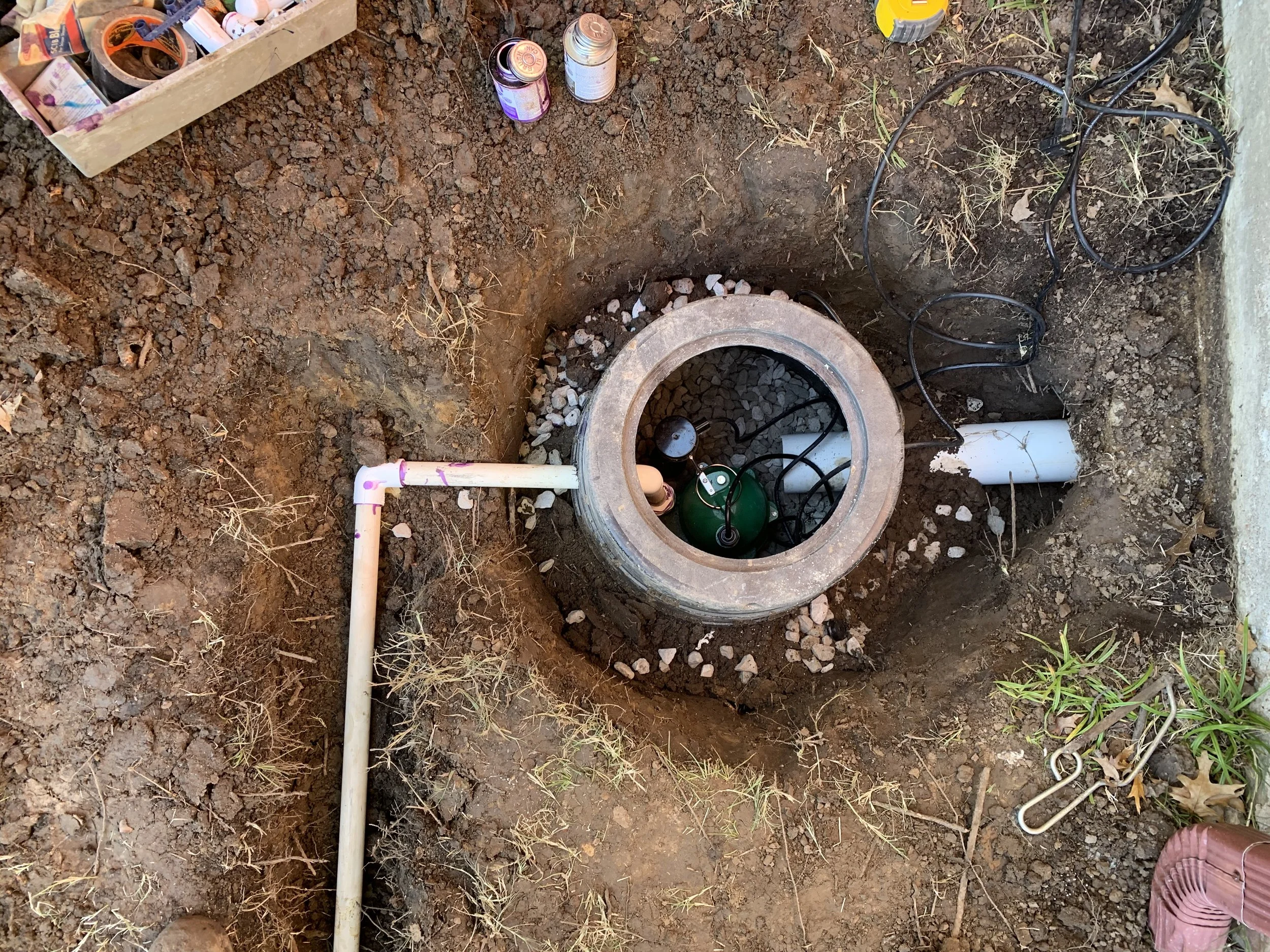
To protect your foundation, you must intercept roof runoff and route it away from your home. The most effective step is installing underground downspout extensions. Your gutters dump thousands of gallons of water directly at the base of your home during a storm. Connecting those downspouts to solid underground PVC pipes routes that massive volume of roof water safely away to the curb or a drainage ditch before it can pool and seep under your foundation.
-
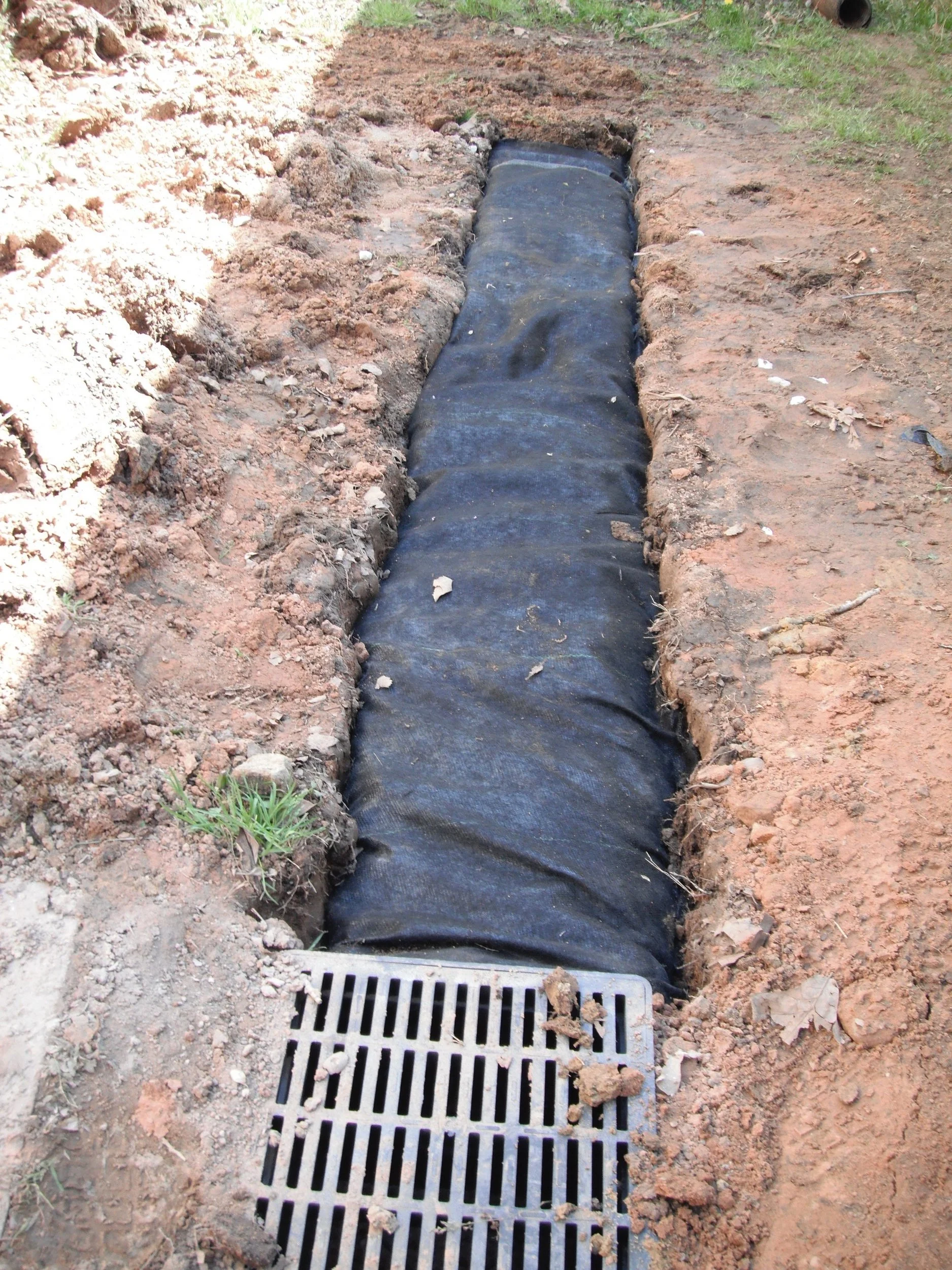
A French drain is a sub-surface trench designed to pull hidden, soaking water out of soggy soil. It consists of a sloped trench lined with water-permeable filter fabric, a perforated pipe (a pipe with small holes drilled in it), and a full backfill of clean drainage gravel. As water fills the saturated ground, it naturally flows through the gravel, drops into the perforated pipe, and is funneled away via gravity to a designated discharge point.
-
It depends on how the water is behaving in your yard:
You need a French drain if your lawn acts like a soggy, muddy sponge for 24 to 48 hours after the rain stops. French drains manage sub-surface groundwater.
You need surface drainage (like catch basins) if you experience immediate, rushing pools of water during a storm that disappear soon after it stops. Catch basins quickly swallow massive amounts of surface water and carry it away through solid pipes.
Note: Many Tulsa yards with heavy clay require a hybrid system combining both.
-
Sloped yards often experience rushing "sheet flow" water that washes out lawns or crashes directly into hardscapes and home walls. We fix this by installing swales or interceptor drains. A swale is a gently sculpted, shallow gravel or rock-lined ditch that naturally catches water running down a hill and redirects it around your home. For steep slopes, we dig an interceptor French drain at the top or middle of the hill to catch groundwater before it reaches your living spaces.
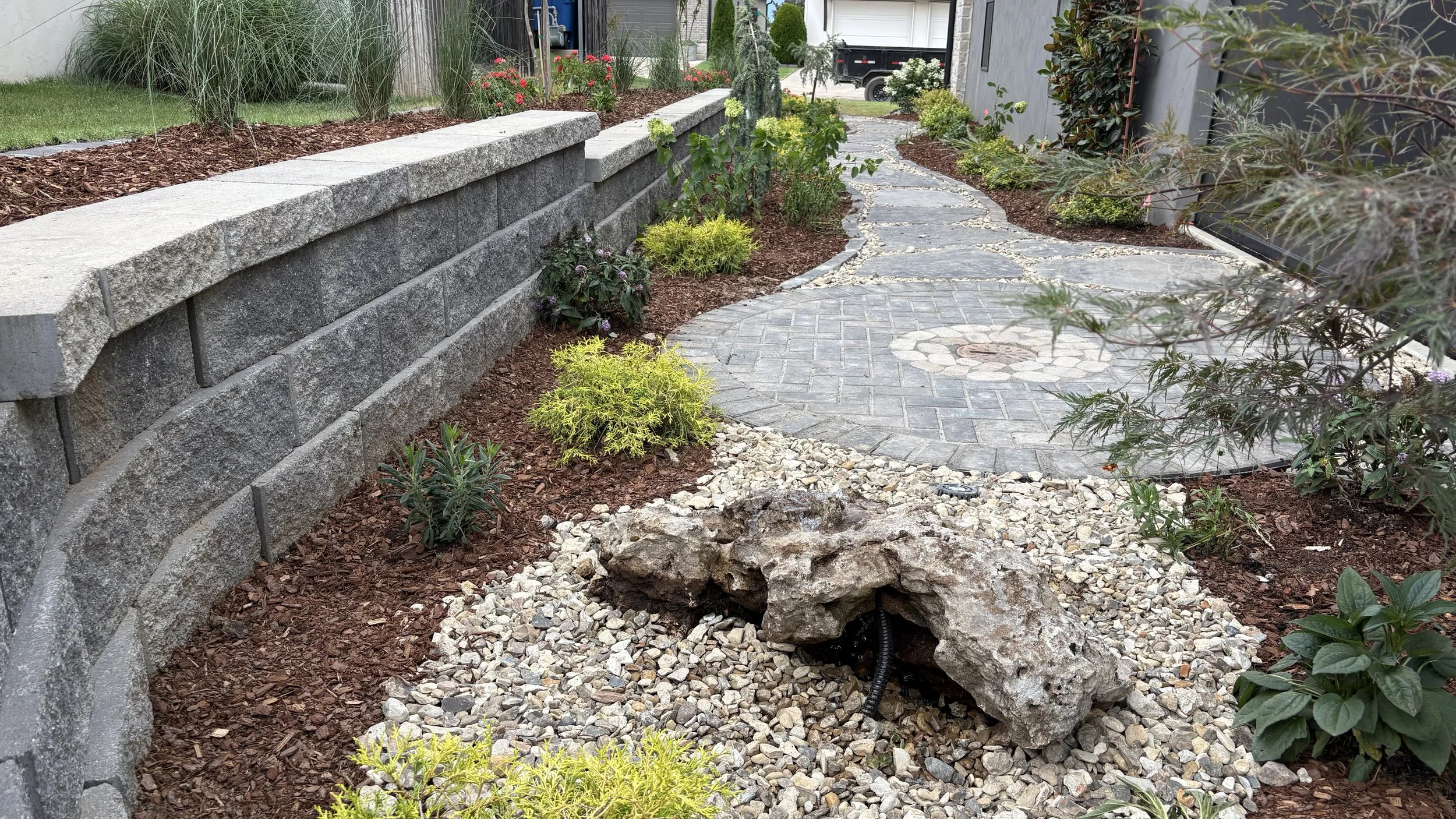
NOTE: Many times we utilize a decorative option we call a “dry creek riverbed” than many clients love.
-
Strategic planting can drastically reduce erosion and standing water. You can utilize native Oklahoma plantings and rain gardens. Deep-rooted native varieties—such as local ornamental grasses, switchgrass, and buttonbush—thrive in our wet-and-dry climate cycles and drink immense amounts of water. Building a shallow rain garden filled with these plants allows surface runoff to naturally collect in one designated zone and filter safely back into the earth rather than flooding your turf.
-
Retaining walls act like dams across a slope; if they are built incorrectly, they will trap water, build up immense hydrostatic pressure, and eventually collapse. A professionally engineered retaining wall must include integrated drainage. When we build walls in Tulsa, we place a perforated drain pipe at the inner base of the wall and backfill the entire backside of the stones with clean gravel. This allows water coming down the hill to safely drop straight down behind the wall and exit through weep holes or side pipes, completely protecting your hardscape investment.
-
Uncontrolled water runoff strips away valuable topsoil, exposes tree roots, and carves deep, unsightly trenches through your property. Over time, this erosion undermines your concrete sidewalks, shifts your paver patios, and can even crack your home's foundation walls as the supporting earth washes away. Fixing erosion requires stopping the water's velocity by installing rock riverbeds, structural retaining walls, or underground piping to tame the flow.
There is no "one-size-fits-all" fix for drainage. The right solution depends entirely on where the water is coming from and where it is pooling. Here are the three most effective systems we install in Northeast Oklahoma:
1. French Drains (For Sub-Surface, Soggy Soil)
If your yard stays spongy and wet days after a storm, you likely need a French drain.
How it works: We dig a trench, line it with filter fabric, install a perforated pipe, and fill it with clean drainage gravel.
The result: Water seeps through the gravel, enters the pipe, and flows away from your home's foundation via gravity to a safe exit point.
2. Catch Basins & Surface Drains (For Immediate Pooling)
If you experience instant flooding in a specific low spot or right next to your patio during a heavy downpour, catch basins are the answer.
How it works: We place grated collection boxes directly into the low points of your yard or along the edge of your hardscape.
The result: Large volumes of rushing surface water drop instantly into the grate and are carried away through smooth, solid pipes before a puddle can even form.
3. Downspout Extensions & Underground Piping
Your roof collects thousands of gallons of water during a typical Oklahoma storm. If your gutter downspouts dump that water right next to your house, it will quickly erode your flower beds and leak into your crawlspace or foundation.
How it works: We connect your downspouts directly to solid underground PVC piping.
The result: Roof runoff is funneled completely away from your living spaces and safely discharged at the curb or a designated drainage ditch.

Featured Past Hardscape Projects
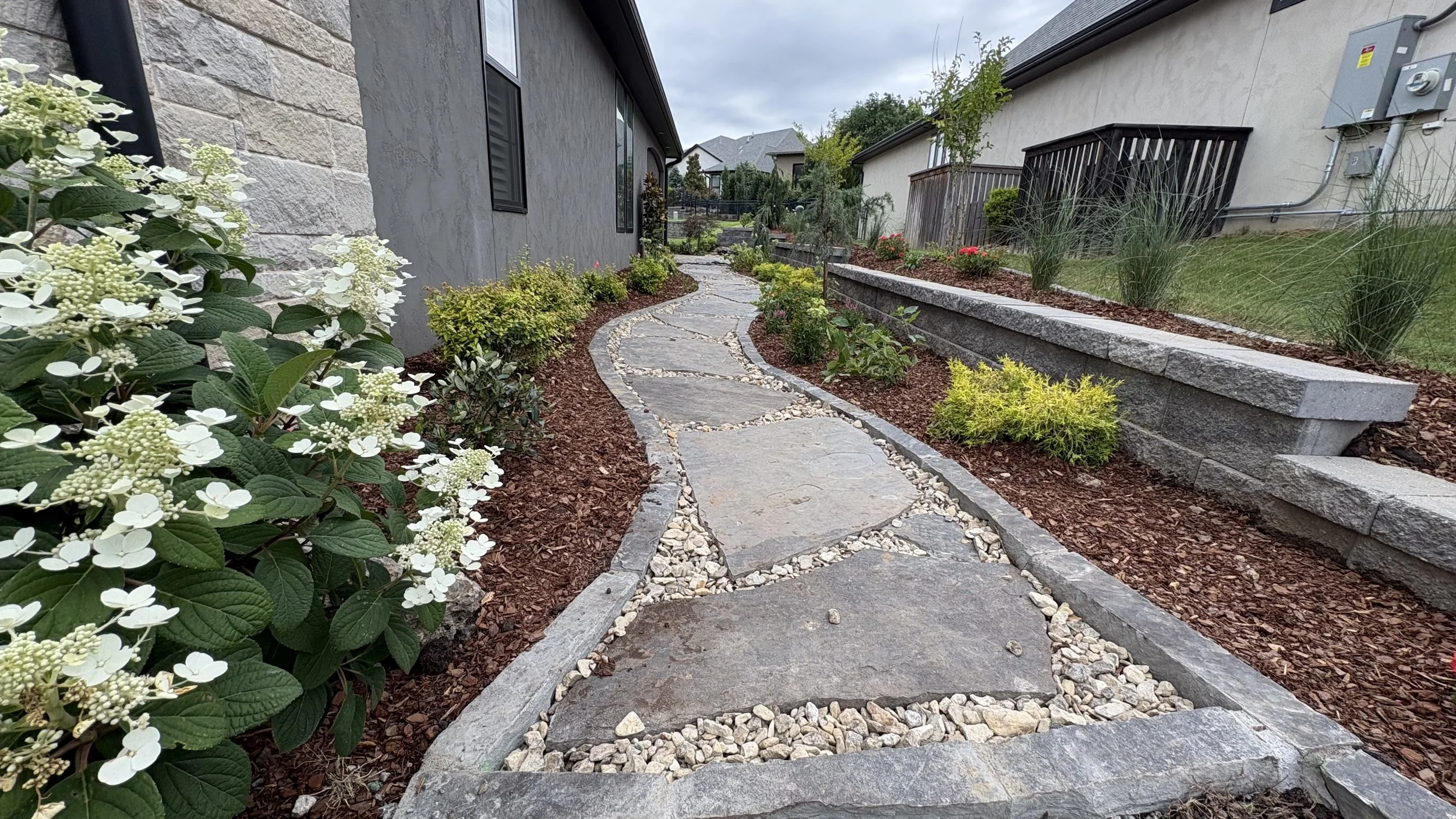
Just click on the pictures of the projects below to see more pics and video walk-throughs of each. To see other hardscaping project pics you can go here.
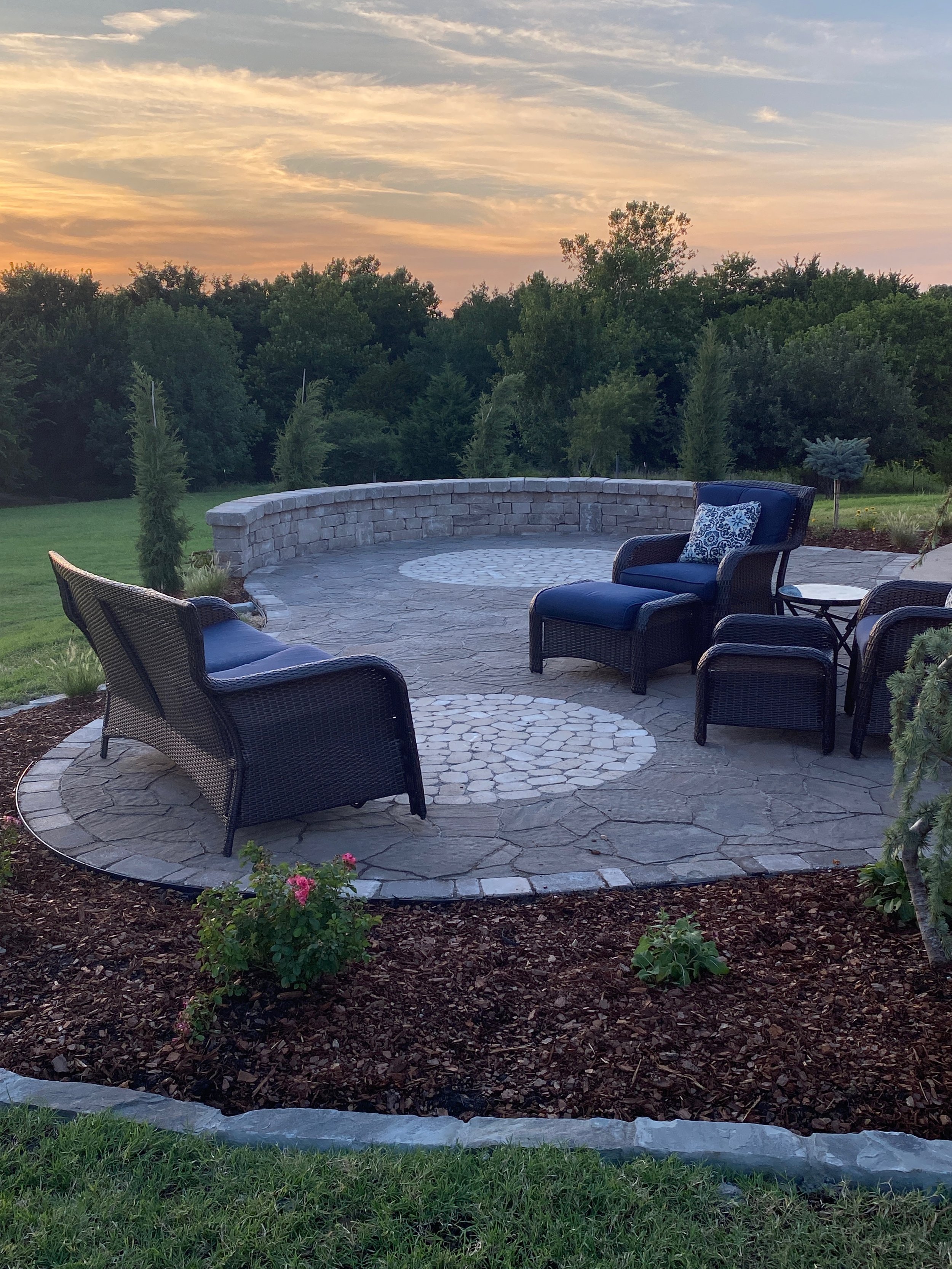
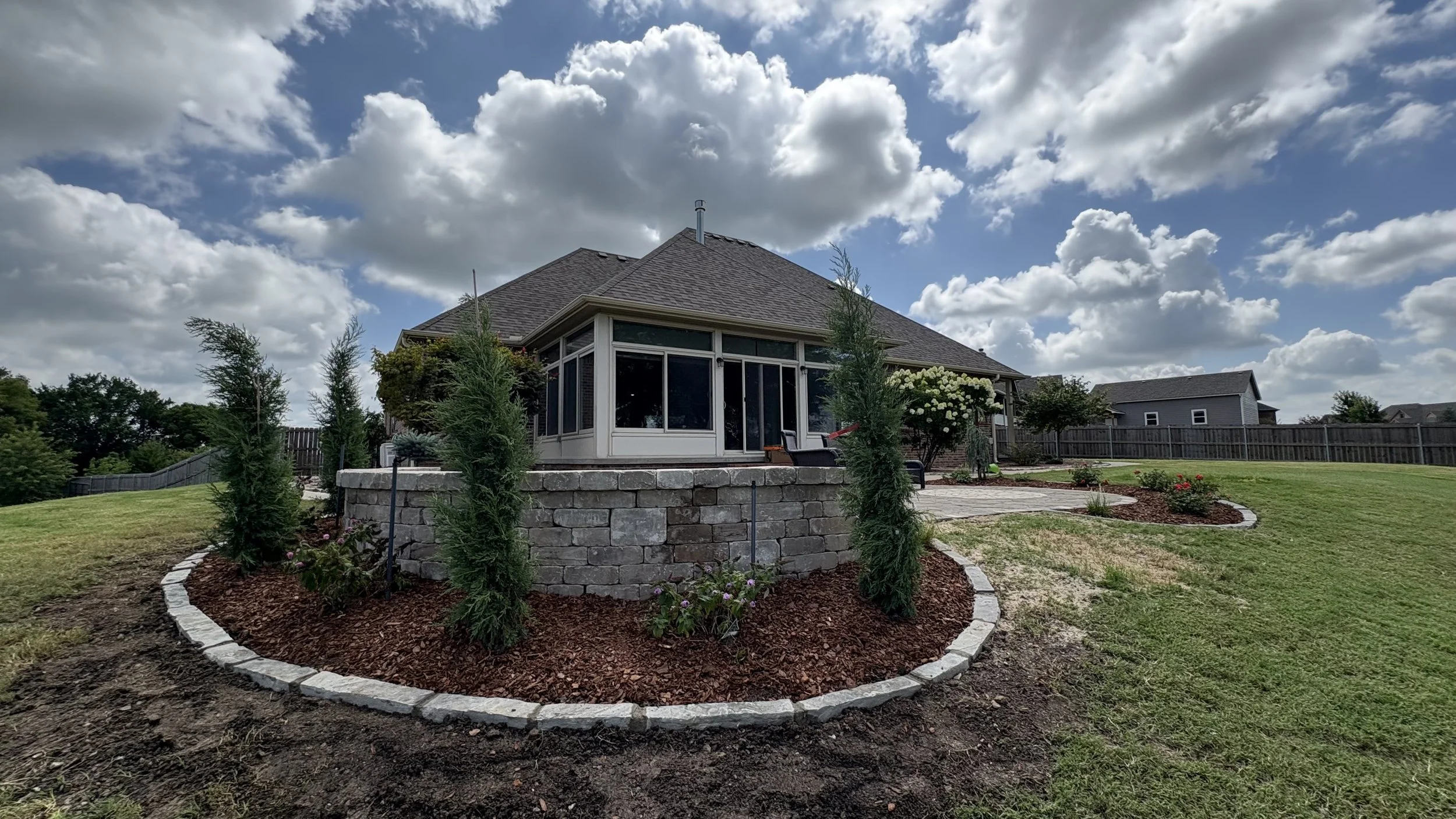
Client
Fichtner Project
Year
07/2025
Year
06/2026
Client
The Elias Project